Skip to content
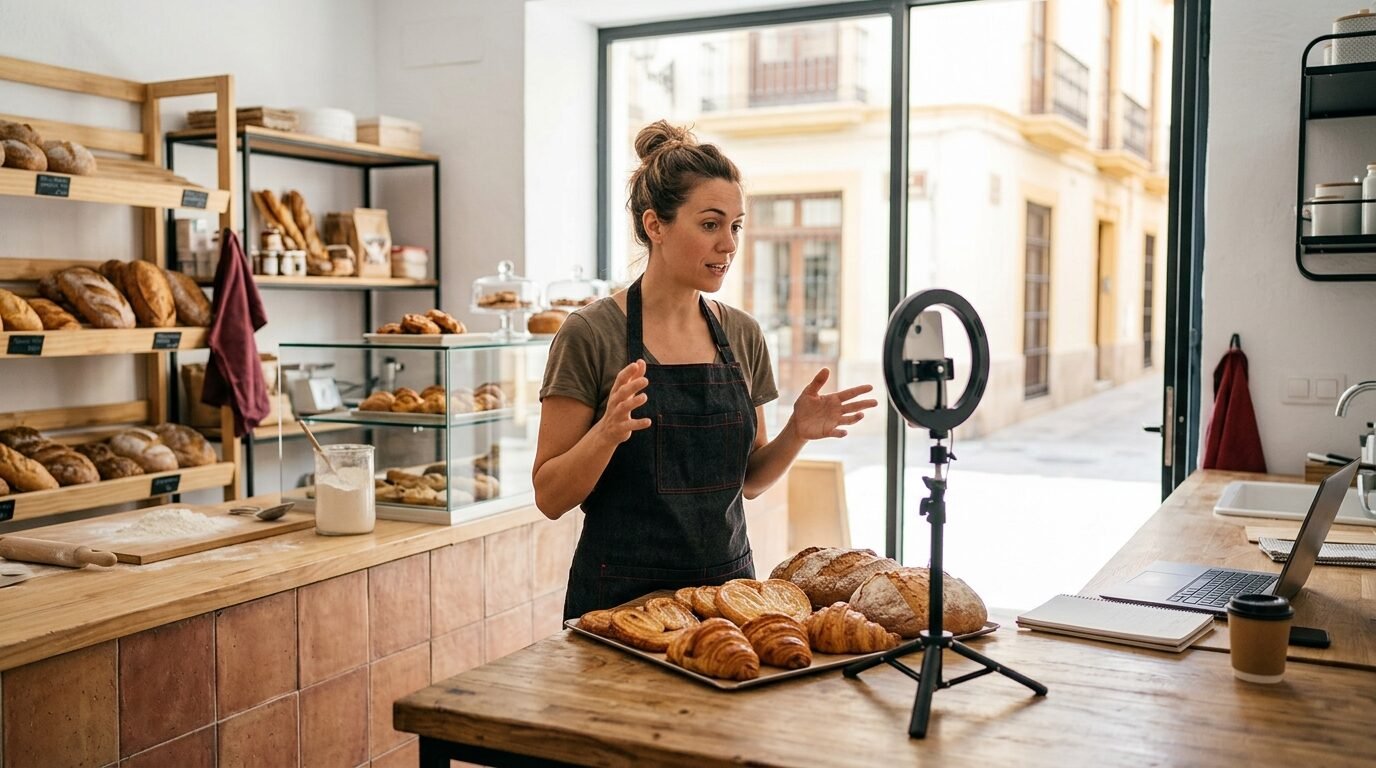
Most small business owners know they should be on social media.
Fewer know what to post, how often, on which platforms, and how to tell if it actually brings in customers.
The result is often a burst of activity, followed by months of silence and a feeling that it does not work.
In this guide we share a simple, realistic approach to social media for small businesses, based on what we see working for our own sites and for our clients.
Start with the goal, not the platform
Before you think about Instagram, Facebook or TikTok, decide what social media should do for your business.
Typical goals are:
- Getting more enquiries, bookings or sales.
- Building trust, so people choose you when they need your service.
- Keeping existing customers coming back.
- Recruiting staff or partners.
- Sending traffic to your website, blog or webshop.
Pick one or two main goals.
They decide what you post, which platforms you use and how you measure success.
Choose the right platforms
You do not need to be everywhere.
It is much better to be active on two platforms than to be half present on six.
Still the largest network in most of Europe, especially for people over 35.
Strong for local businesses, events, groups and paid advertising.
Facebook groups for expats, towns and interests can be a great place to be visible, if you follow each group’s rules.
Visual and popular with a wide age range.
Works well for restaurants, fashion, beauty, interiors, travel, food and any business with products or results that look good in photos and short videos.
The network for B2B, professional services and recruiting.
Posts from a founder or employee often reach more people than posts from a company page.
TikTok
Short, entertaining videos with huge organic reach.
Good for brands that can show personality, behind-the-scenes content or quick tips.
It takes more time to produce content, so only choose it if you can keep it up.
YouTube
The second largest search engine in the world.
Longer guides, product demonstrations and how-to videos can bring traffic for years.
Underrated for home, garden, food, fashion and DIY.
Pins can send traffic to your website long after they are published.

What to post: the content mix
A common mistake is to post only offers and product pictures.
People follow businesses that are useful, interesting or entertaining.
A simple mix that works for many small businesses is:
- Helpful tips and answers.
Answer the questions your customers ask you every week. - Behind the scenes.
Show your team, your workplace, how you work and the people behind the brand. - Results and examples.
Before and after photos, finished projects and customer stories, with permission. - Social proof.
Share reviews and thank customers who recommend you. - Offers and news.
New products, campaigns, events and seasonal offers.
As a rule of thumb, let most posts give value, and keep direct sales posts to a smaller share.
That way your audience is happy to see you in their feed when you do have an offer.
How often should you post?
Consistency matters more than volume.
For most small businesses, two to four posts a week on your main platform is enough.
Stories can be more frequent and less polished.
It is better to post twice a week for a whole year than every day for one month and then stop.
Plan with a content calendar
The easiest way to stay consistent is to plan ahead.
Spend one or two hours at the start of each month to decide topics, write texts and prepare images.
Use a scheduling tool, such as Meta Business Suite, to publish posts automatically on Facebook and Instagram.
Mark important dates in your calendar, such as holidays, local events, seasons and campaigns, in each country where you have customers.
Make content faster
- Batch your work.
Take photos and short videos for several weeks in one session. - Reuse content.
Turn one blog article into several posts, a short video and a story. - Use templates.
Create a few templates in your brand colours for quotes, tips and offers. - Use AI carefully.
AI tools can help with ideas, first drafts and translations, but always edit the text so it sounds like you and is correct. - Film vertical video.
Short vertical videos work across Instagram Reels, Facebook, TikTok and YouTube Shorts.
Engagement is half the work
Social media is social.
Reply to comments and messages quickly and in a friendly way.
Comment on posts from customers, partners and local businesses.
Ask questions in your posts, and use polls and question stickers in stories.
Algorithms reward posts that get conversations going, so a post with good comments often reaches far more people.
Organic or paid?
Organic reach on Facebook and Instagram is limited, so only part of your followers see each post.
A small advertising budget can make a big difference.
Boost your best performing posts to people in your area or target group, and run simple campaigns for offers and lead generation.
Even a modest monthly budget, used consistently, can bring steady results if your offer and landing page are good.
Make sure the Meta Pixel and conversion tracking are installed on your website first, and that your cookie banner covers them.
How to measure if it works
Likes and followers feel good, but they do not pay the bills.
Follow the numbers that are connected to your goal.
- Reach and engagement on your posts.
- Clicks to your website, measured in Google Analytics with UTM links.
- Messages, calls, bookings and leads that mention social media.
- Sales from campaigns and discount codes used only on social media.
- Cost per lead or sale from paid campaigns.
Look at the numbers once a month, keep doing what works and drop what does not.
Your profile is your shop window
Many people look at your profile before they ever contact you.
Use a clear profile picture, normally your logo, and a cover image that shows what you do.
Write a short bio that explains who you help and how, and include a link to your website or a booking page.
Add your contact details, opening hours and location or service area where the platform allows it.
Pin your most important post, such as your main offer or best customer story, to the top of your profile.
Working with influencers and partners
You do not need big influencers to get results.
Local creators, niche bloggers and small accounts with a loyal audience often bring better results for small businesses.
Look for people whose followers match your customers, and whose style fits your brand.
Agree clearly on what they will post, when, and what they get in return, whether it is products, a fixed fee or a commission per sale.
Partnerships with other local businesses also work well, for example a joint competition or sharing each other’s content.
Social media in several countries and languages
If you sell in more than one country, decide whether you need separate profiles or one shared profile.
One profile in English can work for international brands, while local businesses usually do better with content in the customer’s own language.
On Facebook and Instagram you can run ads in several languages from the same account, targeted to each country.
Remember that holidays, seasons, humour and even the best time to post differ from country to country.
Test your posting times and look at the statistics, because the best time in Denmark is not always the best time in Spain.
Common mistakes
- Being on too many platforms.
It spreads your time too thin and the quality suffers. - Posting only offers.
People unfollow accounts that feel like constant advertising. - Ignoring comments and messages.
A slow or missing answer can cost you a customer. - Inconsistent branding.
Use the same logo, colours and tone, so people recognise you. - No link to the website.
Make it easy to go from a post to your offer, booking or shop. - Buying followers.
Fake followers lower your engagement and give you nothing in return.
Rules and privacy
When you post photos of customers or staff, ask for permission first.
Mark paid partnerships and sponsored posts clearly, as required by EU consumer rules and the platforms themselves.
If you run competitions, write clear terms and follow the platform rules.
Only use images and music you have the right to use.
A simple plan to get started
- Choose one or two main goals.
- Pick one main platform and one secondary platform.
- Update your profiles with logo, description, contact details and website link.
- Plan four weeks of posts using the content mix above.
- Post consistently and reply to every comment and message.
- Add a small advertising budget for your best posts or offers.
- Review results after one month and adjust.
Want help with your social media?
We plan, write and design posts, manage your profiles and run advertising campaigns on Facebook, Instagram and LinkedIn.
We work online with businesses all over Europe, in English, Spanish and Danish.
See our social media prices or contact us for a free chat.